Ready to begin?
If you’d like to book a session or chat about how I can support you, I’d love to hear from you. You can reach me, Sarah Woodward, at Cheltenham Kinesiology by clicking the link below.

By tapping on specific acupressure points while acknowledging our thoughts and feelings, we create a powerful opportunity for emotional change. Although it may seem simple, here’s what’s going on beneath the surface:
This is why MTT can create such profound shifts—often more quickly than traditional talk‑only approaches.
Start by naming the emotion you’re feeling. Example: “I feel really angry with my mum.”
Then explore how this emotion feels in your body:
If possible, refine the feeling and understand why it’s there. Example: “I feel angry with my mum because she never listened to me.”
Your set‑up statement follows a simple structure:
“Even though I feel XYZ, I deeply and completely accept these feelings, and I choose to begin moving forward in a new way…”
Examples of Set‑Up Statements
Tap SI3 while repeating your set‑up statement three times.
It’s completely normal if the wording shifts slightly — that flexibility often helps the process feel more natural.
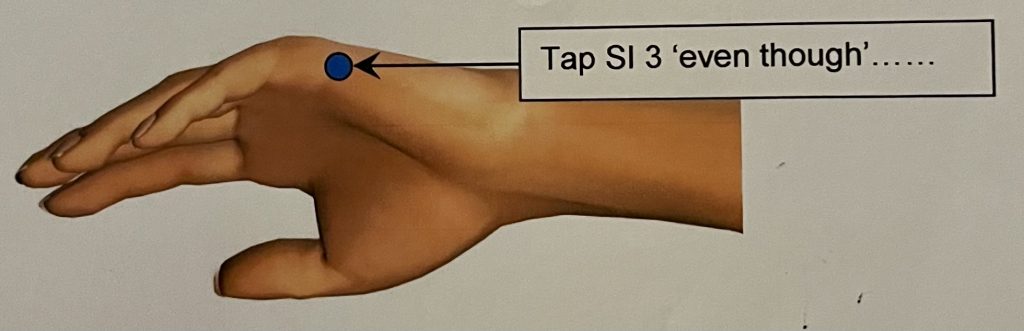
Use short, honest phrases that reflect the emotion. Tap a few times on each meridian point as you make a short statement. If you miss a point, don’t worry — just include it next time.
Example Round
Top of Head (GV20)
“This anger in my chest.”
Eyebrow (BL2)
“She never listened to me.”
Side of Eye (GB1)
“I’ve held this anger for so long.”
Under Eye (ST1)
“It feels so heavy.”
Under Nose (GV27)
“This anger with my mum.”
Chin (CV24)
“I can feel it in my chest.”
Collarbone (KID27)
“This hot, heavy anger.”
Under Arm (SP21)
“I’m holding all this anger.”
Finger (LU11)
“Even though I feel this anger.”
Finger (LI1)
“I deeply and completely accept this feeling.”
Finger (CX9)
“And I deeply and completely accept myself.”
Finger (TW1)
“I choose to move forward, letting go of this anger.”
Finger (H9)
“Feeling free of this anger.”
Finger (SI1)
“Feeling lighter and happier.”
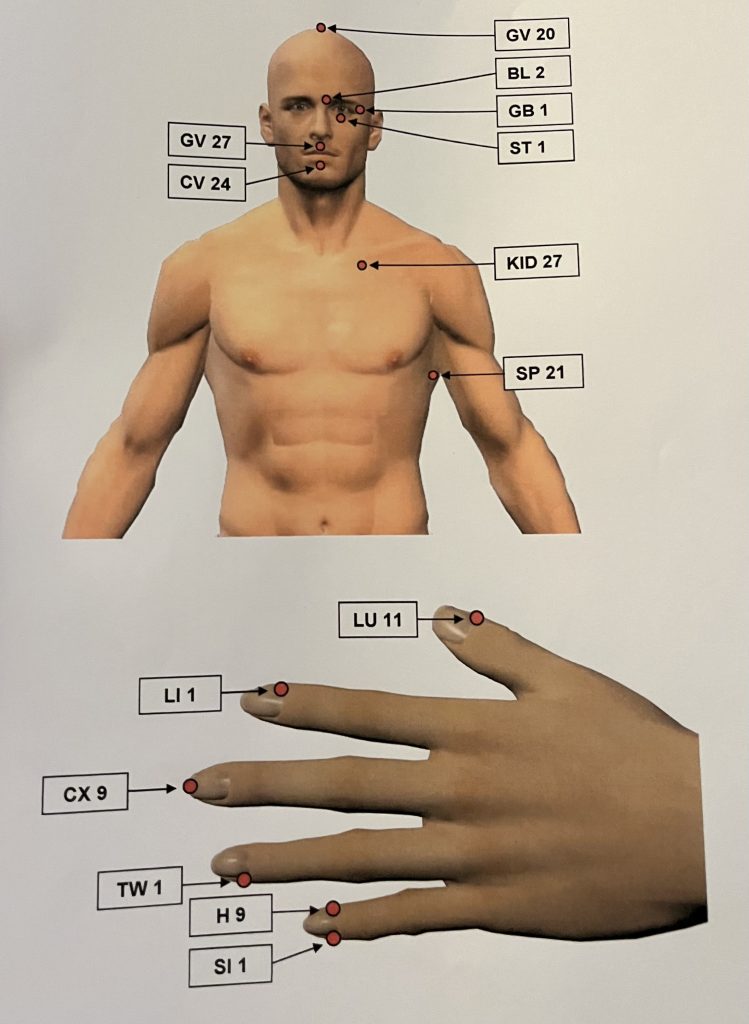
You can repeat this full round two or three times until the emotion begins to soften and feel less distressing.
Take a moment to breathe and notice any positive shift or lightness in your chest.
It’s very common for new layers to appear at this stage — such as sadness, guilt, or fear. If a new emotion arises, simply create a fresh set‑up statement and begin another round.

Although tapping can be learned independently, a Systematic Kinesiologist can guide the process more effectively. Kinesiology takes into account the whole person – helping clients understand themselves, reconnect with their bodies, and feel empowered to move forward.
When paired with MTT, clients often experience:
It’s gentle, respectful, and deeply transformative.
If you’d like to book a session or chat about how I can support you, I’d love to hear from you. You can reach me, Sarah Woodward, at Cheltenham Kinesiology by clicking the link below.